Predictive Analytics in Automotive Manufacturing
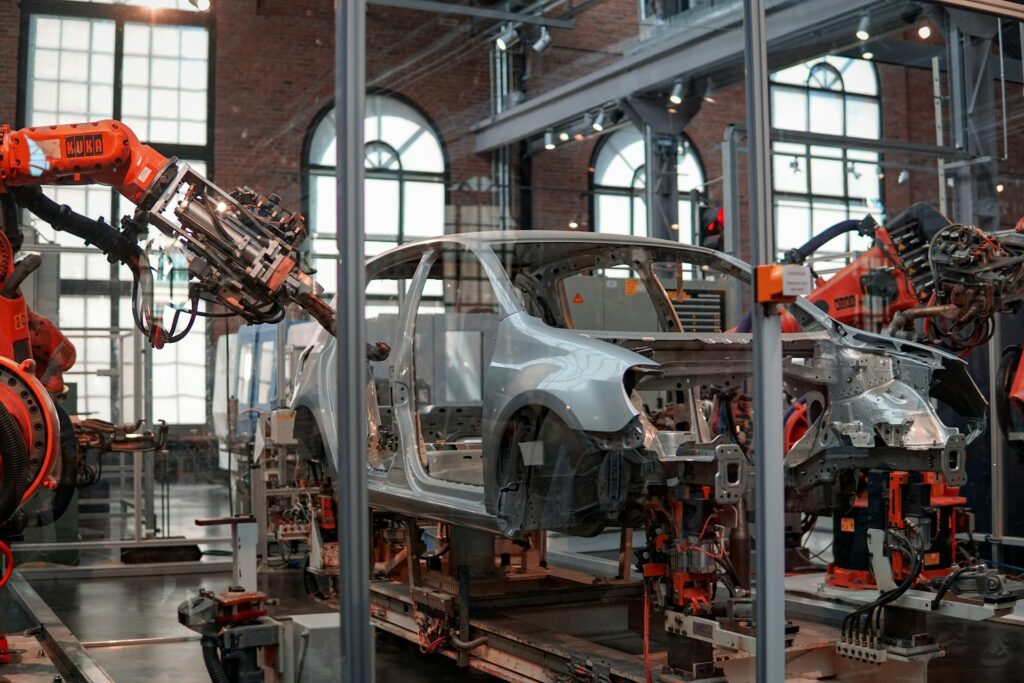
Predictive Analytics in Automotive Manufacturing
Due to the incorporation of cutting-edge technology such as artificial intelligence (AI), Internet of Things (IoT), and big data analytics, the automobile industry is in the midst of a major revolution. Predictive analytics has emerged as a crucial tool for automotive manufacturers that are trying to optimize production, improve the quality of their vehicles, decrease downtime, and retain a competitive advantage in a market that is changing at a fast pace.
The Difficulties Associated with Conventional Automobile Production
In the traditional automobile production process, historical data, set timetables, and reactive maintenance methods are often relied upon. Inefficiencies such as unscheduled downtime, supply chain bottlenecks, discrepancies in quality, and excessive operating expenses are some of the possible consequences of these strategies. As a result of the growing number of customisation requests, more stringent delivery dates, and the rising complexity of assembly lines, manufacturers are in need of more intelligent solutions that will allow them to retain their levels of efficiency and profitability.
Could you please explain what predictive analytics is in the context of automotive manufacturing?
The process of predictive analytics consists of the examination of data that has been gathered both in the past and in real time. This data is then used to make predictions about what is likely to happen in the future, including trends or behaviors. In the automobile industry, it utilizes complex statistical models and machine learning algorithms to forecast possible equipment malfunctions, delays in production, interruptions in the supply chain, and quality problems. Manufacturers are empowered to make choices that are based on data thanks to this proactive strategy, which leads to increased efficiency and lowers operational risks.
Increasing the Effectiveness of Production
Before they create delays in the manufacturing process, predictive analytics may detect inefficiencies and bottlenecks. Through the examination of the performance of machines, the analysis of production data, and the observation of workflow patterns, manufacturers have the opportunity to maximize the efficiency of assembly line schedules, distribute resources in a more efficient manner, and maintain seamless operations. Because of this, the amount of time that is lost, the amount of waste that is generated, and the total throughput that is produced are all reduced.
Prognostic Upkeep and Maintenance
Predictive maintenance is an application of predictive analytics that is considered to be one of the most important. Predictive models are able to foresee equipment failures or maintenance requirements before they occur by virtue of the fact that they continually monitor machinery, robotics, and assembly lines. By using this proactive strategy, it is possible to decrease unexpected downtime, increase the lifetime of machines, and minimize maintenance costs, all while guaranteeing that production remains uninterrupted.
Predictable Defects and Quality Control
In addition, predictive analytics has the ability to improve quality control in the production of automobiles. Manufacturers have the ability to detect trends that contribute to failures by examining previous defect data, production factors, and readings from sensors that are gathered in real time. With the assistance of artificial intelligence, systems are able to anticipate possible quality problems and notify operators to take remedial measures, which guarantees superior product quality and decreases the amount of rework or recalls.
Optimization of the Supply Chain
The automotive manufacturing industry is dependent on intricate supply networks that span the globe. The use of predictive analytics assists in the forecasting of demand, the anticipation of supply shortfalls, and the optimization of inventory levels. By combining data from suppliers, transportation schedules, and production needs, businesses are able to shorten lead times, avoid situations in which they have too much or too little inventory, and maintain a continuous flow of production.
The topics of energy management and sustainability are discussed.
Energy usage at all production plants may be optimized via the use of predictive analytics. Manufacturers have the ability to decrease their carbon footprint, cut their operating expenses, and decrease the amount of energy they waste by examining the schedules for production, the use of machines, and the conditions of the environment. This method provides support for actions that promote sustainability while also ensuring that productivity is not negatively impacted.
Improving the Process of Making Decisions
Managers and engineers are able to make choices that are based on evidence thanks to the ability of predictive analytics to provide actionable insights from large datasets. By taking data-driven choices, the automobile industry is able to achieve better results, lower operational risks, and increased competitiveness. This is accomplished via a variety of methods, including the modification of production plans, the reallocation of resources, and the prioritization of maintenance.
Predictive Analytics in the Automobile Manufacturing Industry: What the Future Holds
With the ongoing advancement of artificial intelligence and machine learning models, the sophistication of predictive analytics will only continue to increase, and it will become more capable of processing datasets that are both bigger and more complicated. Some of the potential advancements that may be realized in the future include production planning that is completely autonomous, defect avoidance that occurs in real time, and supply chain management that is connected with artificial intelligence. By making use of predictive analytics, automotive manufacturers will be able to enhance their product quality, reduce costs, increase their efficiency, and secure a more favorable position in the increasingly competitive global market.
Through the transformation of data into insights that can be acted upon, predictive analytics is altering the car manufacturing industry. Manufacturers are able to operate in a smarter, safer, and more effective manner while still satisfying the ever-increasing demands of the contemporary automobile industry thanks to the optimization of production efficiency and maintenance schedules, as well as improvements in quality control and supply chain management.