How AI Is Revolutionizing Supply Chain Forecasting
How AI Is Revolutionizing Supply Chain Forecasting
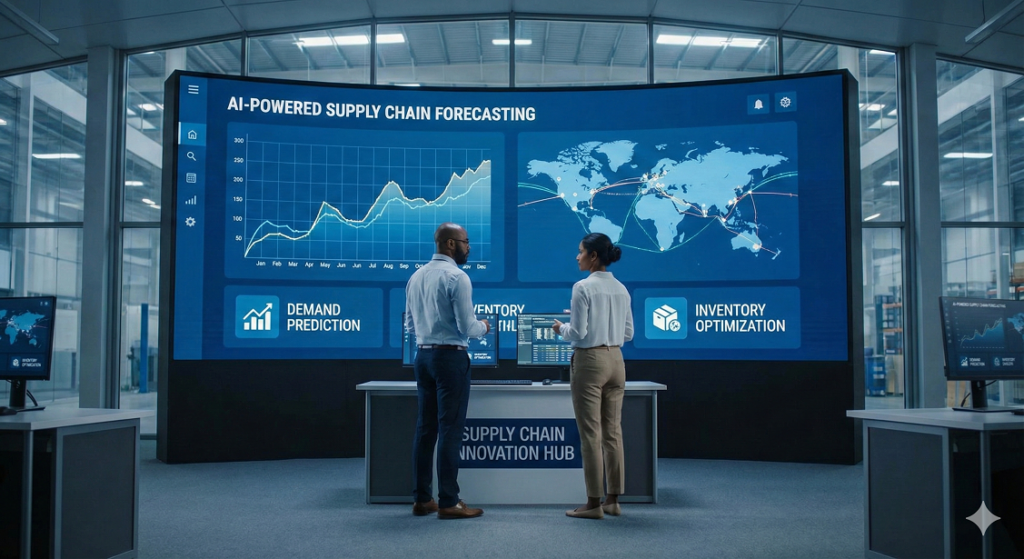
The complexity of supply chains is on the rise, and companies are facing difficulties due to the challenges of global sourcing, demand that fluctuates, and interruptions that are difficult to foresee. Due to their reliance on historical data and human intuition, traditional forecasting approaches often fall short of the mark. Artificial intelligence is currently revolutionizing the way that companies are able to forecast demand, manage inventory, and optimize logistics, which has resulted in supply chain operations being more accurate, nimble, and efficient.
The Cons of Using Conventional Prediction Methods
Conventional approaches to supply chain forecasting are characterized by a reactive rather than a proactive stance. Their primary source of information consists of past sales data and static models, which may not be sufficient for markets that are constantly changing. Overstocking or stockouts may occur as a consequence of sudden demand spikes, seasonal variations, or interruptions in the supply chain, which can result in lost income and unhappy customers. Due to the fact that manual forecasting is a process that requires a substantial amount of time and money, it restricts the capacity of major enterprises to expand.
The ways in which artificial intelligence improves the accuracy of predictions
In order to evaluate large volumes of data, artificial intelligence utilizes sophisticated algorithms, such as machine learning and deep learning. Supply chain managers are able to recognize patterns in sales trends and consumer behavior that humans would overlook, estimate demand swings by taking into account several factors concurrently, and constantly revise projections as new data becomes available because of this.
Inventory management that makes use of predictive analytics
Artificial intelligence may assist businesses in figuring out the best inventory levels, which can decrease the amount of overstock and stockouts. The use of predictive analytics enables companies to estimate what their future inventory requirements will be, automate the process of replenishing inventory, and reduce the expenses associated with storage by ensuring that stock levels are in accordance with anticipated demand.
Intelligent Demand Sensing Driven by Artificial Intelligence
The process of demand sensing is capable of identifying changes in customer demand on a short-term basis. Artificial intelligence (AI) systems may be used to examine data from point-of-sale transactions, social media trends, and market signals in order to generate insights that are almost immediately available. This allows companies to be able to react rapidly to any unexpected developments, to alter production plans in advance, and to minimize the likelihood of inventory becoming outdated.
Making the Most of Distribution and Logistics
Artificial intelligence is used to improve routes, delivery timetables, and warehousing operations. In order to increase efficiency, decrease transportation expenses, and guarantee quicker deliveries, in addition to improving warehouse productivity, machine learning models examine traffic patterns, fuel consumption, and delivery limits.
Management of Risk and Forecasting of Disruptions
By evaluating global events, supplier performance, and market trends, artificial intelligence is able to assist in the anticipation of possible disruptions in the supply chain. In real time, this enables firms to create contingency plans, reroute shipments, or find other suppliers, which helps them preserve continuity and reduce financial losses.
The integration of real-time data with the Internet of Things (IoT)
Internet of Things (IoT) sensors installed in warehouses, transportation, and industrial facilities are constantly generating streams of data. Artificial intelligence is used in the analysis of this information in order to identify any bottlenecks, keep track of inventories in real time, and maximize the effectiveness of activities across the supply chain.
The Potential of Artificial Intelligence in the Supply Chain
Artificial intelligence will continue to change the way that supply chain forecasting is done by allowing for better, quicker, and more robust operations. Companies should anticipate more precise predictions, lower expenses, and more flexibility as the quality of algorithms improves and as the amount of accessible data increases. Businesses that have included supply chains that are powered by artificial intelligence are in a more advantageous position to satisfy the needs of their customers while also maintaining their competitiveness in a market that is undergoing fast transformation.