Smart Factories: Integrating IoT and AI for Efficiency
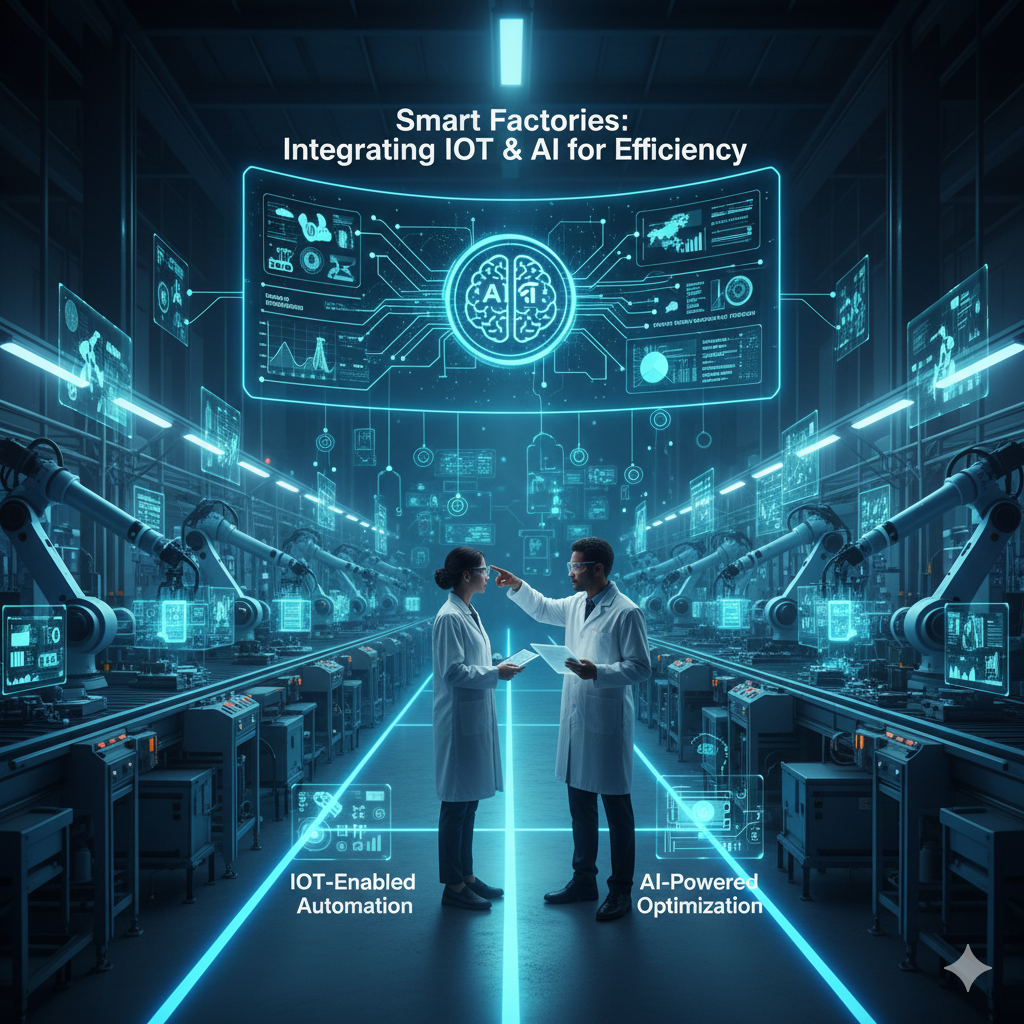
Smart Factories: Integrating IoT and AI for Efficiency
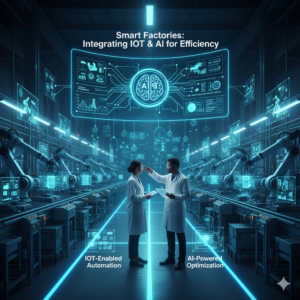
The emergence of smart factories, which include the Internet of Things (IoT) and Artificial Intelligence (AI), has triggered a significant revolution in the manufacturing industry, as these technologies have redefined what it means to be efficient, productive, and operationally intelligent. In contrast to conventional manufacturing facilities, smart factories provide highly linked, data-driven environments in which machines, systems, and people collaborate in a harmonious manner. These factories have the ability to optimize every facet of the manufacturing process, ranging from supply chain management to machine performance, by using artificial intelligence-powered insights and real-time data.
So, What Exactly Are Smart Factories?
Smart factories are production facilities that use cutting-edge digital technology to build a production environment that is linked. IoT devices are used to gather data from machinery, equipment, and production lines. This information is then analyzed by artificial intelligence, which is used to enhance the decision-making process, anticipate the need for maintenance, and optimize operations. The objective is to provide an environment for manufacturing that is self-aware and highly responsive, able to adjust to changes in demand, resource availability, or operating circumstances.
The Part Played by the Internet of Things in Smart Factories
The Internet of Things (IoT) devices are essential to the operation of intelligent manufacturing facilities. There are sensors that are incorporated in machinery, conveyors, and storage systems, and they are constantly monitoring a variety of different characteristics, including temperature, vibration, pressure, and energy usage, among others. Thanks to the availability of this real-time data, we are now able to have a more thorough picture of how the equipment is performing as well as its current production state. Manufacturers are able to manage assets, monitor workflow, and uncover inefficiencies in real time when they make use of the Internet of Things (IoT). This allows for more rapid reactions to problems and reduces interruptions to the production process.
Ways in Which Artificial Intelligence Can Be Utilized to Improve Efficiency
Artificial intelligence helps to make the Internet of Things more powerful by analyzing the massive quantity of data that is gathered from devices that are linked to the internet. The detection of patterns, the prediction of possible faults, and the recommendation of modifications to the process are all capabilities of machine learning algorithms. Artificial intelligence allows for smart factories to be able to:
- Make the most efficient use possible of production schedules and resource allocation.
- Determine where there is a lack of efficiency in order to cut down on energy use.
- Identify flaws as they occur in order to improve the quality control process.
- Make dynamic adjustments to operations in response to variations in the supply chain or demand.
Lowered Interruptions Due to Proactive Upkeep
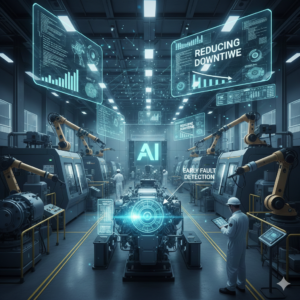
Predictive maintenance is among the most important benefits that may be gained by combining artificial intelligence with the Internet of Things. Artificial intelligence algorithms are used to examine data from sensors in order to identify any early indications of wear or failure. Teams in charge of maintenance are thus able to take action before a breakdown takes place, which results in a reduction in the amount of time that goes by without scheduled maintenance and a decrease in the costs of repairs. The extension of the lifetime of equipment, the enhancement of operational dependability, and the guarantee of constant production output are all made possible by this proactive approach.
Optimization of the Supply Chain
Smart factories have the capability to maintain a strong connection with their supply chains, which enables them to maintain visibility of their inventories, raw materials, and logistics in real time. Analytics enabled by artificial intelligence (AI) can predict demand, improve inventory levels, and simplify the buying process. Smart factories have the ability to respond promptly to fluctuations in market circumstances, minimize waste, and avoid instances of either stockouts or overstocking by connecting supply chain processes with production data.
Productivity and Safety of the Workforce
Instead than substituting human labor, artificial intelligence (AI) and the Internet of Things (IoT) are designed to supplement the skills of people. Smart factories are able to provide personnel with the ability to concentrate on innovation, problem-solving, and supervisory duties by automating repetitive jobs, monitoring equipment, and giving actionable data. In addition, artificial intelligence is capable of forecasting dangerous circumstances via the analysis of operational data, which contributes to the improvement of workplace safety and the reduction of accidents.
Sustainability and Energy Efficiency
Smart factories also play a role in sustainability by keeping track of energy use and pinpointing places where it may be improved. Artificial intelligence algorithms are capable of making adjustments to equipment operation, lighting, and heating, ventilation, and air conditioning systems in a way that minimizes energy usage while maintaining production efficiency. Smart factories contribute to the achievement of sustainability objectives for businesses and the reduction of operating expenses by decreasing waste and improving the management of resources.
Difficulties Associated with the Implementation of Smart Factories
There are difficulties associated with developing smart factories notwithstanding the benefits they provide. Some firms may find it difficult to overcome the high initial expenditure required for infrastructure, Internet of Things (IoT) devices, and artificial intelligence (AI) platforms. Given that networked devices might be susceptible to cyber attacks, data security and privacy are of the utmost importance. In addition, it is necessary to carefully design the integration of artificial intelligence with current legacy systems, provide training for the workforce, and manage change in order to guarantee a seamless transition.
Smart Factories: What Lies Ahead
The manufacturing industry of the future will be characterized by smart factories that are more autonomous, more intelligent, and more interconnected than ever before. The capacity of factories to retain high levels of efficiency, quality, and flexibility while operating with minimum human interaction will be made possible by advancements in artificial intelligence, edge computing, and robots. Businesses that incorporate these technologies into their operations will benefit from a competitive advantage by decreasing expenses, enhancing their ability to respond to changes, and ensuring that their production remains steady in a global market that is always evolving.
The next step in the development of the manufacturing industry is the creation of smart factories, which are made possible by the integration of artificial intelligence and the Internet of Things. They are not just concerned with automation; they are concerned with the creation of a connected ecosystem in which real-time insights, predictive analytics, and intelligent decision-making are the forces that drive efficiency, sustainability, and innovation at every level of the production process.