AI-Powered Inventory Management for Large Warehouses
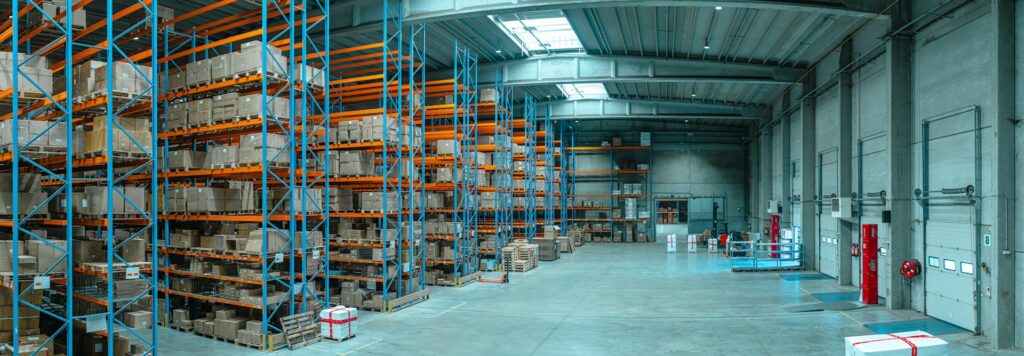
AI-Powered Inventory Management for Large Warehouses
The process of managing inventory in huge warehouses has long been an intricate and labor-intensive endeavor. Maintaining ideal stock levels while reducing storage costs and maintaining prompt order fulfillment is difficult due to the large size of operations, the wide variety of products offered, and the unpredictable nature of demand. Warehouse management is undergoing a revolution due to the capabilities of Artificial Intelligence (AI), which allows for the development of inventory management systems that are smarter, quicker, and more accurate.
Issues with Conventional Methods of Inventory Management
The use of manual procedures, spreadsheets, or simple software systems is often the foundation of conventional inventory management practices. Inaccuracies, postponements, and inefficiencies are likely to occur using these techniques. Overstocking has the potential to tie up cash and raise storage expenses, while understocking may result in lost revenues, delayed delivery, and unhappy customers. In order to maintain their operating effectiveness, large warehouses with thousands of stock-keeping units (SKUs) and rapid turnover need increasingly sophisticated systems.
The Ways in Which Artificial Intelligence Is Used to Alter Inventory Management
There is a great deal of data being examined by systems that are powered by artificial intelligence (AI). These systems take into consideration a wide range of sources, including historical sales, seasonal patterns, supplier performance, and real-time warehouse operations. It is possible for machine learning systems to detect trends, predict demand, and provide accurate suggestions for inventories. Warehouse managers are given the ability to maintain ideal stock levels, eliminate waste, and increase the pace of fulfillment as a result of this.
Monitoring and Analytics in Real Time
Artificial intelligence (AI) is used in inventory systems to monitor items that are located in a warehouse. This is accomplished by using Internet of Things (IoT) sensors, radio-frequency identification (RFID) tags, and barcode scanners to provide real-time tracking of goods. The entire visibility of the location, amount, and movement of goods is made possible by these technologies. The use of real-time analytics enables managers to address any inconsistencies that arise right away, to avoid running out of inventory, and to make the most efficient use of available storage space.
Anticipating Demand and Optimizing Inventory Levels
By examining past sales data, industry trends, and external variables like as promotions or seasonal fluctuations, artificial intelligence (AI) enhances the accuracy of demand forecasting. Warehouses are able to keep the appropriate items in the appropriate amounts when they are able to make precise predictions, which reduces the amount of overstock and keeps holding costs to a minimum. Artificial intelligence may also recommend dynamic reorder points and automate the process of replenishing inventory, so guaranteeing a constant supply of products that are in great demand.
Efficiency of Automation and Workflow
Workflow efficiency is improved when artificial intelligence (AI) is integrated with warehouse automation systems, such as robotic picking systems and autonomous guided vehicles (AGVs). Artificial intelligence is able to efficiently assign priority to jobs, optimize choosing routes, and distribute resources. The human effort required is diminished, the fulfillment of orders is expedited, and the expenses associated with operations are reduced, all while maintaining a high degree of accuracy in the management of inventories.
Mitigation of Risk and Avoidance of Errors
Artificial intelligence is a useful tool for detecting possible hazards in inventory management, including but not limited to expired products, damaged goods, or misplaced items. Managers are notified by predictive algorithms before problems become more serious if any abnormalities are detected. The number of mistakes that are made is decreased, losses are avoided, and the accuracy of inventory records is guaranteed by this proactive strategy.
Coordination with the Management of the Supply Chain
The management of inventory in a warehouse that is driven by artificial intelligence is intimately related to the operations of the supply chain. Artificial intelligence systems are able to synchronize with suppliers, improve procurement plans, and guarantee that goods are delivered on time by forecasting demand and keeping track of inventory levels. The integration results in a reduction of bottlenecks, an improvement in lead times, and an overall increase in the efficiency of the supply chain.
Automated Inventory Management Systems in Warehouses and the Role of Artificial Intelligence
The management of warehouse inventory will be characterized by a growing degree of autonomy, intelligence, and reliance on data-driven decision-making in the future. Artificial intelligence (AI) technologies will continue to advance, providing predictive insights, adaptive inventory tactics, and seamless interaction with robots and smart logistics. Warehouses that employ artificial intelligence (AI) to manage their inventory will see a decrease in expenses, an increase in accuracy, quicker operations, and better customer satisfaction.
By integrating real-time monitoring, predictive analytics, and intelligent automation, artificial intelligence (AI)-powered inventory management is revolutionizing the way that huge warehouses operate. Warehouses are able to function more efficiently, cut down on expenses, and satisfy the increasing requirements of contemporary supply chains by taking use of artificial intelligence, which improves workflow efficiency, minimizes mistakes, and optimizes inventory levels.