Intelligent Waste Management Using AI

Intelligent Waste Management Using AI
Industries, communities, and service providers are altering the ways in which they manage the collecting, sorting, recycling, and disposal processes via the use of intelligent waste management techniques that utilize artificial intelligence. Traditional methods often depended on human monitoring, timetables that were established in advance, and reactions to the buildup of trash that were reactive in nature. These obsolete techniques are replaced with artificial intelligence (AI), which utilizes data-driven systems that are capable of predicting patterns of waste, optimizing processes for operations, and drastically reducing expenses associated with overhead. Waste management becomes more intelligent, environmentally friendly, and much more efficient via the integration of sensors, machine learning models, automation, and real-time analytics. The need of making this transition becomes even more apparent when one takes into account the fact that the amount of garbage produced around the globe is increasing and that rules pertaining to the environment are becoming more stringent.
The Process of Developing Intelligent Waste Management Ecosystems
Artificial intelligence (AI)-based waste management solutions are the result of the larger trend of public services moving toward digital infrastructure. Data analytics is used with hardware like as smart bins, compaction equipment, and video sensors in these systems. Decision-makers are able to keep track of waste levels, pinpoint inefficiencies, and alter processes that would otherwise go unnoticed due to the constant flow of data. This development indicates a shift from waiting until issues arise to address them to being more proactive in the management of trash.
Real-time monitoring in conjunction with intelligent waste containers
Organizations can keep track of the fill levels of smart bins that are fitted with ultrasonic or weight sensors without having to conduct human inspections. If these bins are used in conjunction with artificial intelligence algorithms, they have the capability of detecting patterns of consumption, categorizing categories of garbage, and sending notifications prior to the point at which they become overfilled. Dashboards that provide real-time information may give insights into which locations produce the most garbage, the time of day that fills up peak waste, and the impact that seasonal events have on waste production. Unwarranted excursions may be avoided by taking use of this visibility to engage in dynamic planning.
Routes for the Collection of Garbage that have been Optimized using Artificial Intelligence
By evaluating data from sensors, weather conditions, road blockages, and operational limits, artificial intelligence (AI) revolutionizes the logistics of garbage collection. AI develops optimum collecting pathways that avoid wasted driving, save fuel, and cut emissions instead of following predefined routes. It also organizes pickups based on projections of fill levels, which means that vehicles are only in operation when they are required. This may lead to a reduction in operating expenses and a substantial decrease in carbon emissions when implemented in big metropolitan areas or industrial zones.
Identification and Sorting of Waste Materials Utilizing Machine Learning
Computer vision is used by AI-powered sorting devices in order to differentiate between recyclable materials, organic components, and hazardous garbage. Machine learning models are used to categorize each item that is found in the trash stream according to its form, texture, and material composition, while cameras and sensors scan the waste stream. This automation greatly enhances the accuracy of sorting compared to human procedures, decreases the rate of contamination, and raises the total output of recycling. There are also some sophisticated technologies that are capable of detecting precious items that would otherwise go unreported.
Robotics Applications in the Automation of Waste Management
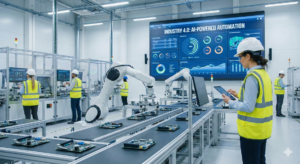
The integration of artificial intelligence with robotic arms enables facilities to automate sorting activities that need both speed and accuracy. These robots are capable of removing pollutants, collecting goods from conveyor belts, or separating objects according to specified classifications. The robots are able to consistently enhance their decision-making skills and adapt to different forms of waste over time via the use of adaptive learning. This decreases the need for human employees to fill positions that are dangerous or require a lot of repetition, and it improves the uniformity of operations.
Analysis That Is Predictive in Nature for Waste Trends
Authorities in charge of trash management are able to identify patterns of garbage creation weeks or even months in advance with the assistance of predictive models that are powered by artificial intelligence. The factors that are taken into account while making these projections include the density of the population, the level of industrial activity, the circumstances of the weather, and the amount of garbage that has been produced in the past. Planners have the ability to anticipate and make preparations for personnel allocation, equipment consumption, and recycling capacity in advance via the comprehension of these patterns. Predictive analysis provides assistance for strategic choices that lower long-term expenses and mitigate disruptions.
Boosting the Effectiveness of Recycling Programs Utilizing Artificial Intelligence
The incorporation of artificial intelligence into the sorting, processing, and decision-making phases of the recycling process results in a considerable increase in the efficiency of the operation. Systems are capable of detecting contamination levels, analyzing market trends for recycled materials, and making recommendations for modifications to processing processes. Artificial intelligence (AI) is also capable of assisting in the development of sophisticated recycling methods, including chemical recycling, by calculating the most effective route for the treatment of certain materials. The great degree of accuracy that is achieved contributes to the increased recovery rates and improved quality of the recovered goods.
Hazardous Waste Identification with the Assistance of Artificial Intelligence
Because of the environmental and health hazards it poses, hazardous waste must be handled according to rigorous guidelines. Artificial intelligence is used to recognize hazardous materials by means of categorization algorithms and image sensors. These technologies decrease the likelihood of improper disposal, limit the leaking of harmful substances, and guarantee adherence to environmental requirements. Additionally, the use of automated detection safeguards employees against the potential exposure to hazardous substances that might occur during the processes of sorting or transportation.
Using Artificial Intelligence Surveillance to Stop the Unauthorized Disposal of Waste
Illegal dumping is a significant problem that affects both urban and rural areas. Advanced artificial intelligence surveillance systems that are equipped with object identification, thermal imaging, and motion detection capabilities are used to keep an eye on potentially dangerous zones and distant locales. In the event that the system detects any unlawful dumping activity, it is capable of generating alarms, recording evidence, or providing authorities with a notification in real time. As a result of this proactive strategy, unlawful conduct is discouraged, and the expenses associated with cleaning are reduced.
Intelligent recycling centers This project is made possible by the use of artificial intelligence.
Artificial intelligence is used by contemporary recycling facilities to improve throughput, decrease the amount of time spent on idle activities, and provide output streams that are consistent. Sensors and automation systems are used to monitor machine loads, identify jams, and forecast repair requirements. In addition, artificial intelligence assists in the management of energy usage throughout the stages of sorting and processing, hence increasing the cost-effectiveness and environmental friendliness of recycling facilities. There are fewer bottlenecks, faster recycling rates, and a more steady operation as a consequence of this.
Lowering Expenditure on Operations by Means of Automation
Manual sorting, route planning, and facility monitoring are all examples of labor-intensive operations that may be minimized via the use of AI-enabled automation. Organizations have the potential to reduce fuel consumption, equipment wear, and unanticipated maintenance expenses by decreasing human error and optimizing operations. Furthermore, waste management firms are able to expand their operations with the aid of automation without having to increase their labor or infrastructure expenditures in a comparable manner.
Benefits Regarding Environmental Impact and Sustainability
Artificial intelligence (AI) has a direct impact on environmental sustainability, and it does this by increasing the rate of recycling, decreasing the amount of carbon emissions produced, and reducing the level of contamination of trash. A reduction in the number of cars on the road may be achieved by efficient route design, and intelligent sorting results in an improvement in resource recovery. Furthermore, artificial intelligence helps programs that promote the circular economy by identifying materials that are appropriate for repurposing, reuse, or advanced recycling techniques.
Artificial Intelligence and Its Role in the Waste Management Sector Going Forward
In the years to come, artificial intelligence will be integrated even more deeply with robots, drones, autonomous collecting trucks, and sophisticated sensor networks. The objective of cities and companies is to construct completely automated waste ecosystems in which predictive analysis is the driving force behind everyday operations. The function of manual intervention will undergo a transformation as these systems continue to develop, moving away from the execution of physical activities and transitioning towards the supervision of workflows that are driven by artificial intelligence and optimized for efficiency.