How Autonomous Systems Learn from Live Data Streams

How Autonomous Systems Learn from Live Data Streams
The term “autonomous systems” refers to robots or software that are able to carry out activities without the need for frequent intervention from humans. In order to make judgments, adjust to new situations, and maximize performance, these systems depend on real-time data. This includes anything from self-driving vehicles to industrial robots and monitoring tools driven by artificial intelligence. One of the most important aspects of their efficiency is their capacity to acquire knowledge from real-time data streams, which enables them to react in a dynamic manner to unforeseen circumstances.
What Exactly Are Live Data Streams?
The term “live data streams” refers to sources of information that are continuously and in real time created by digital platforms, devices, or sensors. For instance, information such as GPS signals, traffic patterns, temperature measurements, swings in the stock market, and data from Internet of Things sensors in smart homes or industries are examples. The difference between live data streams and static datasets is that live data streams are continuously updated, which provides autonomous systems with the most recent information to let them make judgments and alter their behavior on the go.
In the context of autonomous systems, the function of machine learning
The algorithms that are used in machine learning make it possible for autonomous systems to interpret live input and learn over time. These systems recognize patterns, identify abnormalities, and generate predictions based on the information that is being received. This allows the algorithms to improve their accuracy and develop their models without having to explicitly design for every conceivable circumstance. This is accomplished by continually evaluating real-time feeds. It is imperative that this be done for systems that function in situations that are either dynamic or unpredictable.
The use of feedback loops and adaptation in real time
Feedback loops are essential for autonomous systems because they allow them to learn from the results of their activities. An example of this would be a self-driving automobile that watches how it handles turns or responds to impediments, and then adjusts its behavior in the future depending on the input it receives from its performance. To guarantee that the system continues to develop in terms of its efficiency, safety, and reliability throughout time, this continuous loop of action, observation, and adjustment is implemented. These adaptive mechanisms are dependent on the live data stream in order to function properly.
When it comes to data streams, dealing with noise and irregularities
However, real-time data streams are almost never flawless. Challenges like as noise, missing data points, and anomalies are often encountered. The handling of flaws is accomplished by autonomous systems via the use of filtering methods, anomaly detection, and probabilistic modeling. This guarantees that the system will continue to make stable decisions even in the presence of some data that is inconsistent or inaccurate. This is an essential feature for applications such as autonomous navigation or healthcare monitoring of patients.
When compared to Batch Learning, Online Learning
When it comes to learning from live data, online learning approaches are often used rather than the more conventional batch learning approach. The process of training models using static datasets at regular periods is known as batch learning. Online learning, on the other hand, modifies models in a step-by-step manner as new data is received, which enables the system to rapidly react to the new information. For situations in which circumstances are subject to fast change, such as those involving the financial markets, robots, or traffic management systems, this technique is absolutely necessary.
In the context of autonomous systems, reinforcement learning
One of the most important ways that autonomous systems may benefit from live data streams is via the use of reinforcement learning. In response to the activities that are carried out, systems are provided with feedback in the form of incentives or punishments. They acquire, over the course of time, tactics that maximize the advantages they get. It is possible for autonomous systems to manage complicated decision-making contexts with the application of reinforcement learning. Some examples of such environments include navigating a busy metropolis or maximizing energy consumption in industrial settings.
Location-based data processing and computing at the edge
Edge computing, which processes data locally on devices rather than forwarding it to a central server, is used by many autonomous systems in order to increase the efficiency with which they process live data transmissions. This results in a reduction in latency and make it possible for the system to react rapidly to shifting circumstances. Edge computing is especially crucial for applications such as drones, autonomous cars, or industrial equipment, where delays might potentially affect either the safety or the efficiency of the system.
Evaluation and Updating of the Model on Long-Term Basis
Continuous assessment of the models used by autonomous systems is necessary in order to guarantee that the learning process is correct and applicable. Continuous monitoring of performance indicators is carried out, and models are retrained or fine-tuned if there is a change in patterns or the appearance of new data types. Through this continual process, the system is able to maintain its capacity for adaptation and resilience, as well as its ability to deal with new difficulties without the need for human intervention.
Applications Across All Sectors of Industry
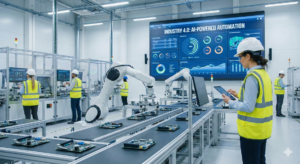
Numerous industries are undergoing a change as a result of live data-driven autonomous systems. Vehicles that drive themselves are able to adapt to real-time traffic and weather circumstances in the transportation sector. Robots are used in manufacturing to improve assembly lines based on the data collected by sensors. In the field of finance, artificial intelligence systems watch market swings in order to make rapid trading choices. Wearable technology is being used in the medical field to monitor vital signs and notify caretakers of any abnormalities. The capacity to learn from real-time data is causing a revolution in terms of efficiency, safety, and responsiveness across all sectors of operations.
Learning from Live Data Streams Presents a Number of Obstacles
Despite the benefits, there are still obstacles to overcome. The systems must be able to manage vast amounts of data, guarantee the safety of the data, control the dependability of the sensors, and prevent making decisions that are hazardous or biased. Furthermore, the integration of different data streams originating from a variety of sources necessitates the use of sophisticated processing algorithms and a solid infrastructure. Finding solutions to these problems is very necessary in order to ensure the continuous development of autonomous technology.
A Look Into the Future of Self-Managed Learning
There will be a significant increase in the capacity of autonomous systems to develop themselves via the use of live data streams by the year 2030 and beyond. Systems will be able to learn more quickly, adapt to settings that are more complicated, and make judgments that are safer and more intelligent as a result of advancements in artificial intelligence algorithms, real-time analytics, and edge computing. The confluence of these technologies holds the promise of a future in which autonomous systems would function with little supervision, hence boosting productivity, safety, and creativity throughout the whole society.